Mode of production
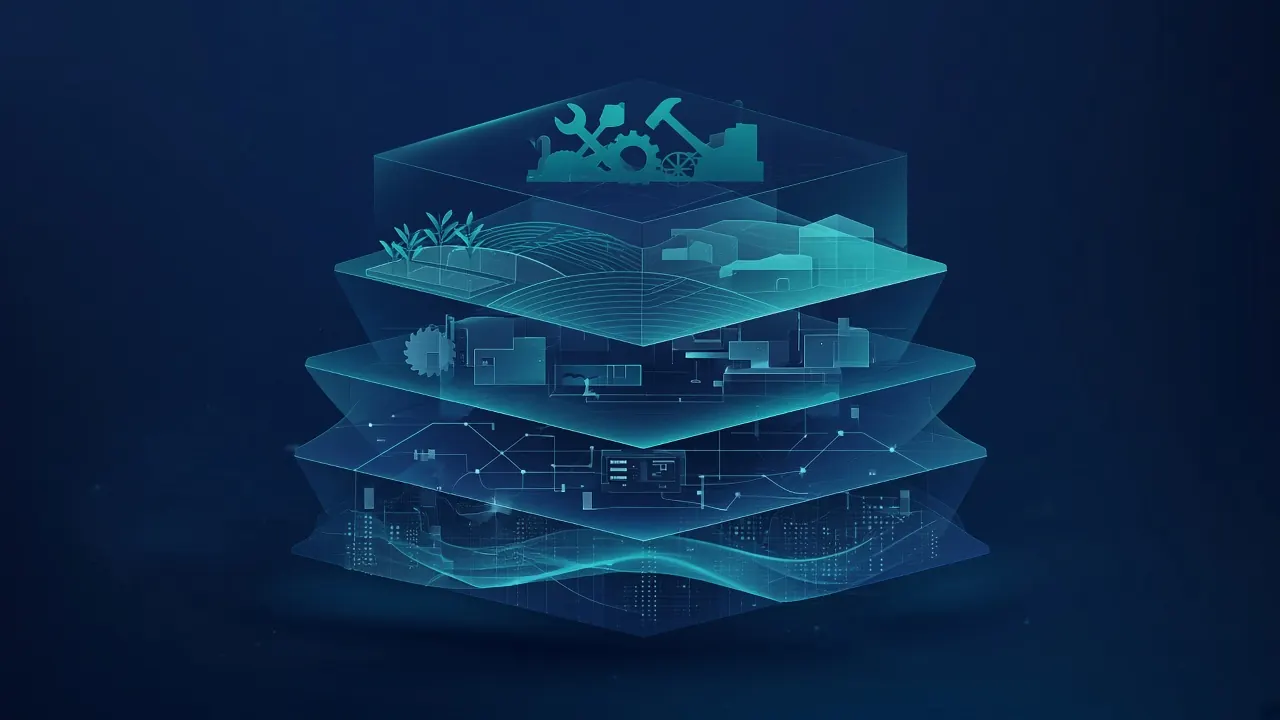
A theoretical name for how a society organizes the making of what it needs.
In plain words, a mode of production is how a society makes what people need, and the deals about who owns the tools. In a tradition of social theory associated with Karl Marx, the term pairs the forces of production — tools, skills, and knowledge — with the relations of production, the terms on which people use them.
The 1859 preface sketches modes as a sequence. That sequence is a theory. Historians have argued with it. It is not a timetable, and it is not a finding that every society must pass the same stages. The page on historical transitions is about why the shift often called feudalism to capitalism has no single date.
The use of the term is to hold two questions together: what people produce with, and who depends on whom while they do it. The second question is where a theory of the working class begins. The forces can become more interdependent — socialized in a descriptive sense — while ownership lags. Whether that gap is a basis for collective provision is taken up under material capacity and political choice.
Related ideas






How it connects
Show these connections as a list
- Forces of production — checking this device
- Relations of production — checking this device
- Historical transitions — checking this device
- The working class — checking this device
- Socialized production — checking this device
- Material capacity and political choice — checking this device
- The end of history — checking this device
Further reading
- Karl Marx, preface to A Contribution to the Critique of Political Economy (1859). (opens in a new tab)
A theoretical statement. The preface is the usual short source for the pairing of forces and relations. It is not a historical proof.
What's next
Open another page from the map, or come back to this one later.
Membership
These pages stay free. Member is $19 a month or $190 a year, for early essays and Mode Notes. Scholar is $39 a month or $390 a year, and includes the self-paced course when it opens. Both support a project run by one person.